

Disasters do not just impact our homes and belongings — they can take a toll on our mental wellbeing, too. While most people plan for the practical side of an emergency, preparing mentally and emotionally is just as important.
Use this guide for tips on how to be more mentally prepared, which can help you stay calm, think clearly, and recover faster.
Anticipate that the situation will be stressful.
- Disasters are stressful. It is normal to feel anxious, worried or overwhelmed.
- Think about how you usually respond in high-stress situations.
- Being aware of your reactions helps you respond more calmly when it matters most.
Identify the types of feelings and thoughts you might experience.
- Notice your typical signs of stress — such as an upset stomach, negative thoughts, or feeling frozen.
- Everyone reacts differently to stress. Knowing the signs makes it easier to manage stress in the moment.
Learn skills to manage your feelings and thoughts.
- Use simple techniques like deep breathing to stay calm.
- Focus on what you can do right now — not on what might happen.
- Remind yourself: “The calmer I am, the more effectively I can act.”
What to expect
Everyone responds differently, but knowing what to expect can help you feel more prepared.
The following experiences are common:
Before a disaster:
- Worry, anxiety, or feeling overwhelmed
- Physical symptoms including nausea, headaches, tense muscles, racing heartbeat
- Flashbacks or other trauma symptoms (especially if you have experienced a disaster before)
During a disaster:
- Fear, helplessness, or grief
- Isolation and disconnection
- Trauma from witnessing loss or destruction
These techniques can help you stay emotionally balanced during high-stress situations:
- Focus on small, manageable tasks you can control
- Talk to someone you trust — or write down how you’re feeling
- Take breaks from media and negativity
- Do things that make you feel good (listen to music, go for a walk, play with a pet)
- Practice self-compassion — you are doing your best

Slow your breathing
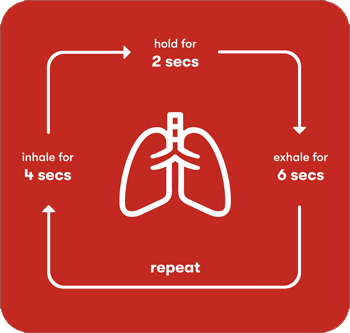
Research shows that slow, deep breathing can reduce anxiety in the moment.
- Find a comfortable place to sit or lie down
- Inhale slowly through your nose and deep into your lungs for 4 seconds
- Hold your breath for 2 seconds
- Exhale slowly through your mouth for 6 seconds
- Repeat for several minutes or until calm.
To practise square breathing, settle comfortable in a chair. Place both feet on the ground, and your hands on your abdomen to feel the movement of your breath.
Breathe in, two, three, four.
Hold, two three, four.
Breathe out, two, three, four.
Hold, two three, four.
Close your eyes, if you’re comfortable to do so, and follow my voice.
Breathe out, two, three, four.
Hold, two, three, four.
Breathe in, two, three, four.
Hold, two, three, four.
Breathe out, two, three, four.
Hold, two, three, four.
Breathe in, two, three, four.
Hold, two, three, four.
Breathe out, two, three, four.
Hold, two, three, four.
Breathe in, two, three, four.
Hold, two, three, four.
Breathe out, two, three, four.
Hold, two, three, four.
A self-care kit is like a first aid kit for your emotions. It’s filled with things to help you feel better in tough times.
Prepare a small box with things that help you stay grounded:
- List of calming activities
- Comforting items like tea, warm socks, snacks
- Journal and pen
- Favourite book or playlist
Resilience grows when we are connected:
- Know who you can count on — friends, family, neighbours, community groups
- Help each other prepare, plan, and check in regularly
- Sign up to updates via your local council website or emergency services in your state
Lifeline – 13 11 14
Beyond Blue – 1300 22 4636
13 YARN – 13 92 76
Suicide Call Back Service – 1300 659 467
QLife – 1800 184 527
1800 RESPECT – 1800 737 732
MensLine Australia – 1300 78 99 78
Additional support for children:
Kids Helpline – 1800 55 1800
Headspace – 1800 650 890
ReachOut – reachout.com
Extra support
Need support in your language? Visit TIS National or ask for an interpreter.
At AAMI, we are here to protect what matters most — including the wellbeing of your loved ones and community. For support with disaster recovery and emotional wellbeing, visit our Disaster Hub.
Sometimes your circumstances might mean you need additional support or assistance in dealing with us. This could be due to your physical or mental health, family or financial situation, or cultural background. Please visit our help and support page.
For more wellbeing tips and resources
