

When it comes to disaster preparedness, helping your household, children, or community plan ahead can make all the difference to their wellbeing. Everyone reacts to stress in their own way — and your support can help them feel calmer, safer, and more in control.
This guide offers practical ways to support others before a disaster hits.
Helping the people around you to mentally and emotionally prepare means you will all manage better in an emergency.
Encourage others to learn these three steps:
Let them know it’s normal to feel stressed or uncertain.
- Talk about how stressful the situation might be
- Reassure them that it’s okay to feel scared — but these feelings don’t have to take over
- Encourage open conversations about what might help them cope.
- Help them identify their own signs of stress.
- Everyone reacts differently to stress — they might have unhelpful thoughts like “I can’t cope,” feelings like fear or helplessness, or physical symptoms like a racing heart or upset stomach
- Explain that being aware of their reactions makes it easier to manage them.
- Teach them how to manage their emotions and stay calm.
- Share techniques like deep breathing, or grounding exercises that can help them feel centred
- Encourage them to focus on things they can control, like practical tasks in the home
- Remind them: “The calmer we are, the clearer we can think and act”
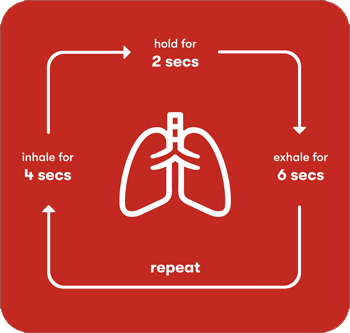
Slow your breathing
Research shows that slow, deep breathing can reduce anxiety in the moment.
- Find a comfortable place to sit or lie down
- Inhale slowly through your nose and deep into your lungs for 4 seconds
- Hold your breath for 2 seconds
- Exhale slowly through your mouth for 6 seconds
- Repeat for several minutes or until calm.
To practise square breathing, settle comfortable in a chair. Place both feet on the ground, and your hands on your abdomen to feel the movement of your breath.
Breathe in, two, three, four.
Hold, two three, four.
Breathe out, two, three, four.
Hold, two three, four.
Close your eyes, if you’re comfortable to do so, and follow my voice.
Breathe out, two, three, four.
Hold, two, three, four.
Breathe in, two, three, four.
Hold, two, three, four.
Breathe out, two, three, four.
Hold, two, three, four.
Breathe in, two, three, four.
Hold, two, three, four.
Breathe out, two, three, four.
Hold, two, three, four.
Breathe in, two, three, four.
Hold, two, three, four.
Breathe out, two, three, four.
Hold, two, three, four.
Preparing as a family
Getting ready together helps build confidence and connection. Try:
Step 1 : Creating a household emergency plan and practising it
Step 2 : Packing an emergency kit (let everyone choose something important to include)
Step 3 : Making a list of must-take items if you need to evacuate
Step 4 : Preparing your property as a team.
Talking to children about disasters
Actively including children in emergency planning can help them feel more secure and develop valuable coping skills.
- Be honest but reassuring — explain that disasters can happen, and there is a plan to stay safe
- Speak calmly and confidently to reduce fear
- Encourage them to ask questions and express how they feel
- Acknowledge that feelings like worry are completely normal
- Speak to them at an age-appropriate level, avoiding scary language or overwhelming detail
- Reassure them: “We’ve got a plan, and we will get through it together”.
Helping kids manage worry
If a child is feeling worried, it’s important to explain that feelings like worry aren’t bad and won’t hurt them. Encourage them to try some fun activities to help them feel calm:




Significant weather affect us all — but preparing together builds resilience. You can:
- Check in with neighbours, especially those who may need extra support
- Sign up to updates via your local council website or emergency services in your state
- Share preparedness tips and mental health resources
- Encourage kindness, calm, and cooperation.
Signs someone may need extra help
- Acting out or withdrawing
- Trouble sleeping or concentrating
- Seeming unusually anxious or angry
- Changes in appetite or energy
- Avoiding discussion or preparations altogether
If these symptoms continue for more than 4–6 weeks, encourage them to speak to a doctor.
Remember, support starts with you
Supporting others is easier when you take care of yourself. Make time for small moments of calm, connection, and rest — looking after yourself helps you show up for others with more energy and patience.
Learn how to help yourself and others overcome extreme weather events with our Emotional Recovery Guide, supported by the Black Dog Institution.

Lifeline – 13 11 14
Beyond Blue – 1300 22 4636
13 YARN – 13 92 76
Suicide Call Back Service – 1300 659 467
QLife – 1800 184 527
1800 RESPECT – 1800 737 732
MensLine Australia – 1300 78 99 78
Additional support for children:
Kids Helpline – 1800 55 1800
Headspace – 1800 650 890
ReachOut – reachout.com
Extra support
Need support in your language? Visit TIS National or ask for an interpreter.
At AAMI, we are here to protect what matters most — including the wellbeing of your loved ones and community. For support with disaster recovery and emotional wellbeing, visit our Disaster Hub.
Sometimes your circumstances might mean you need additional support or assistance in dealing with us. This could be due to your physical or mental health, family or financial situation, or cultural background. Please visit our help and support page.
For more wellbeing tips and resources
Strategies for long term health and wellbeing
How to help when you’re worried about someone’s mental health
